THE GHOST THAT WOULDN’T DIE
An excerpt from the life and mind of J. Monroe Johnson
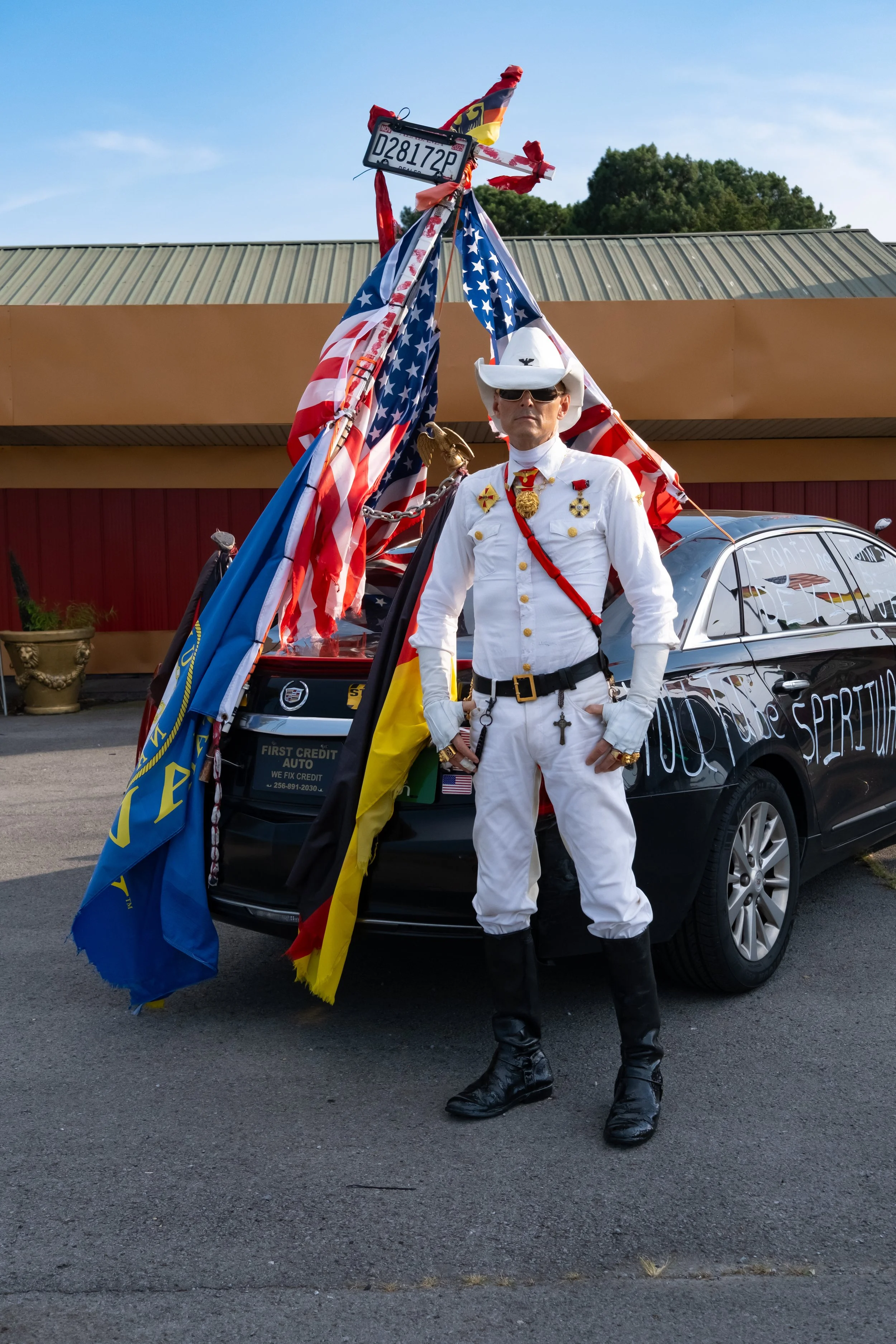
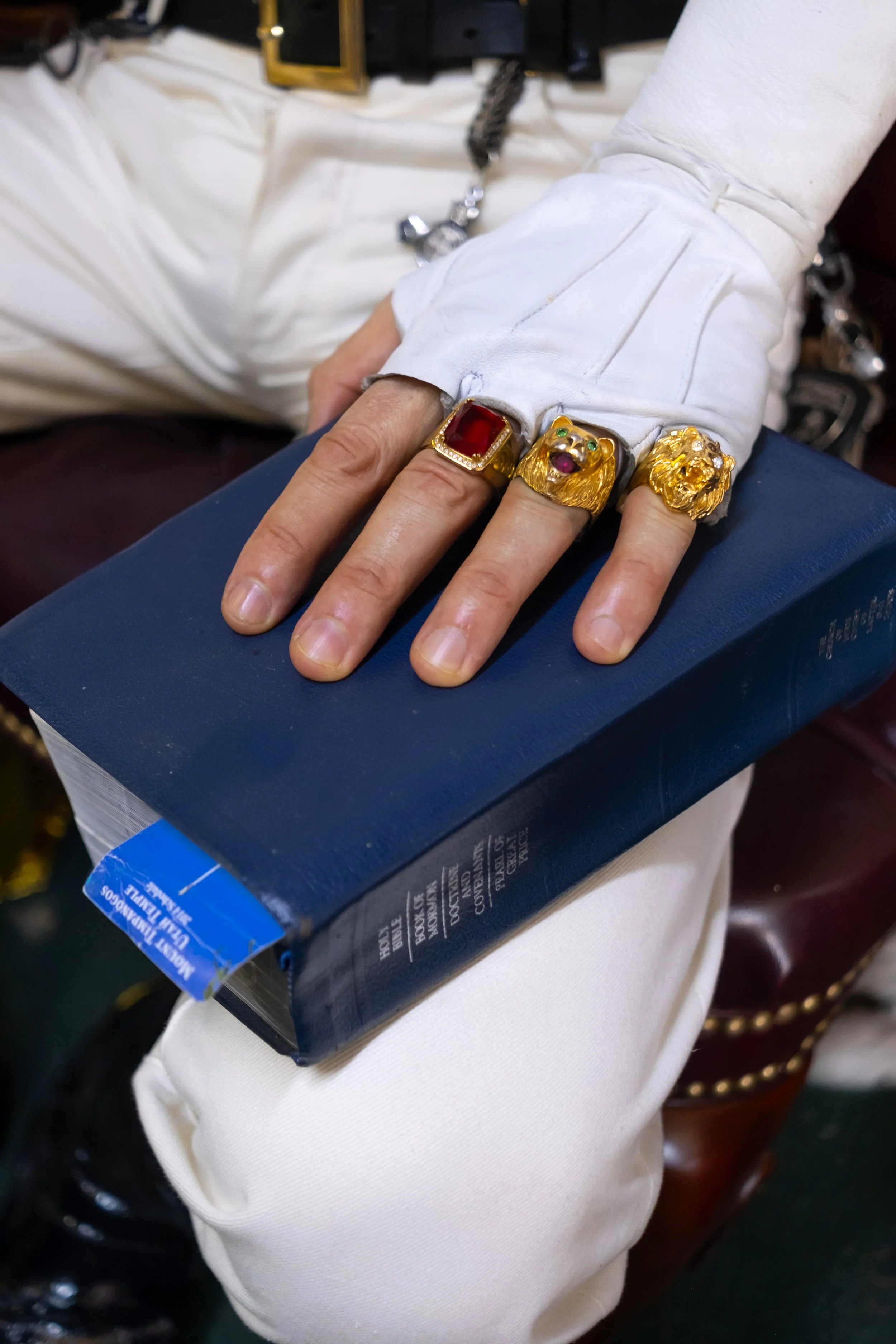
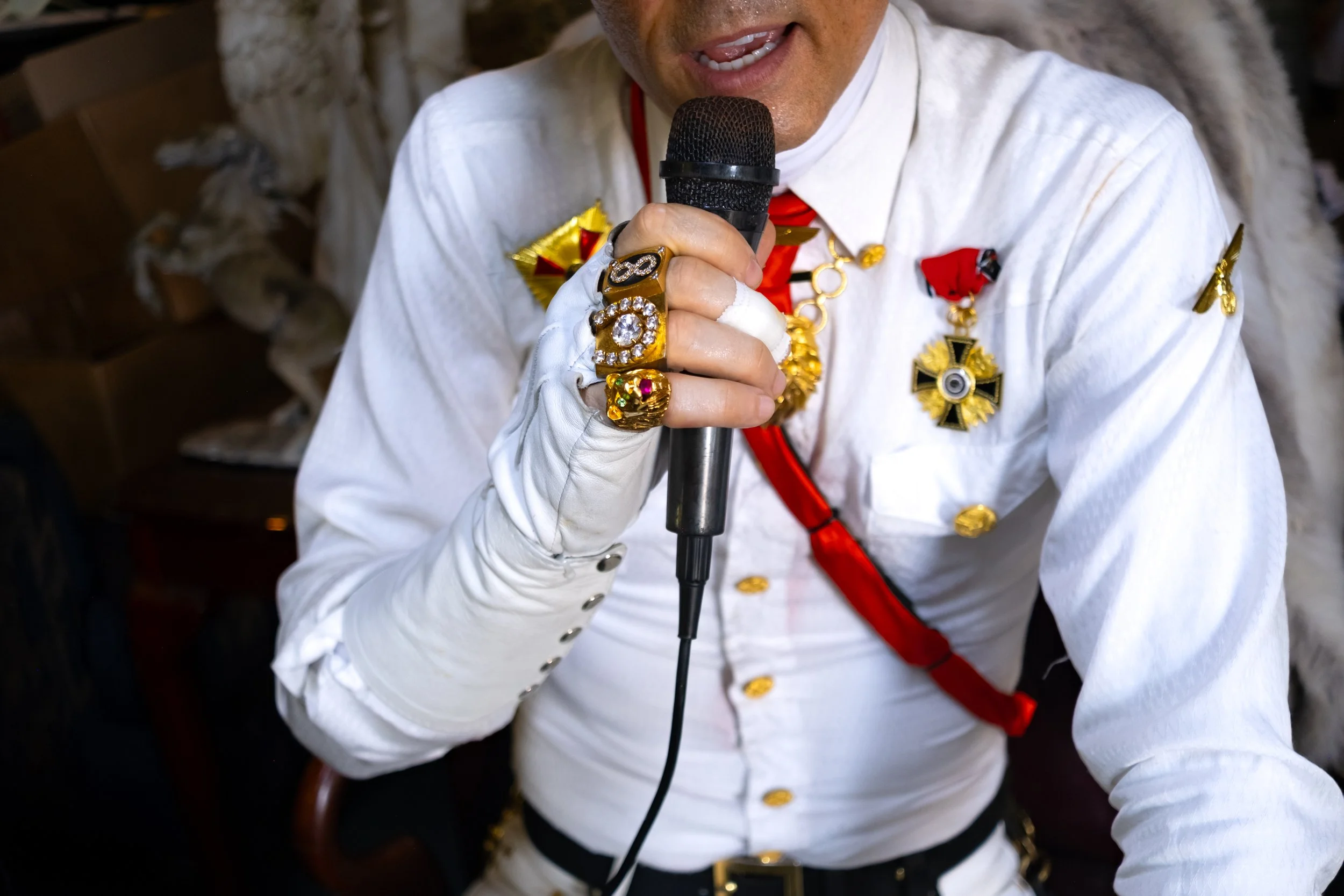
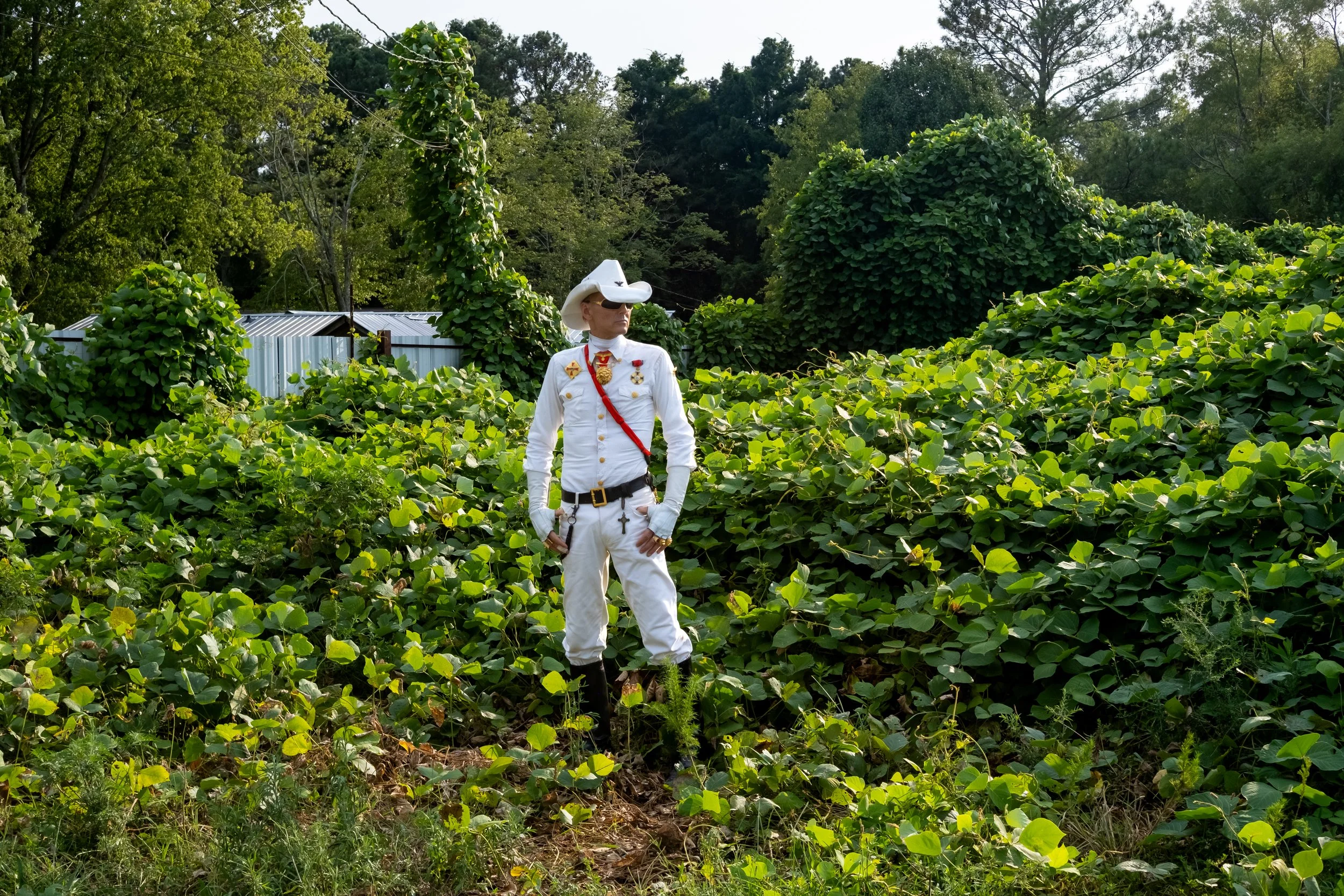
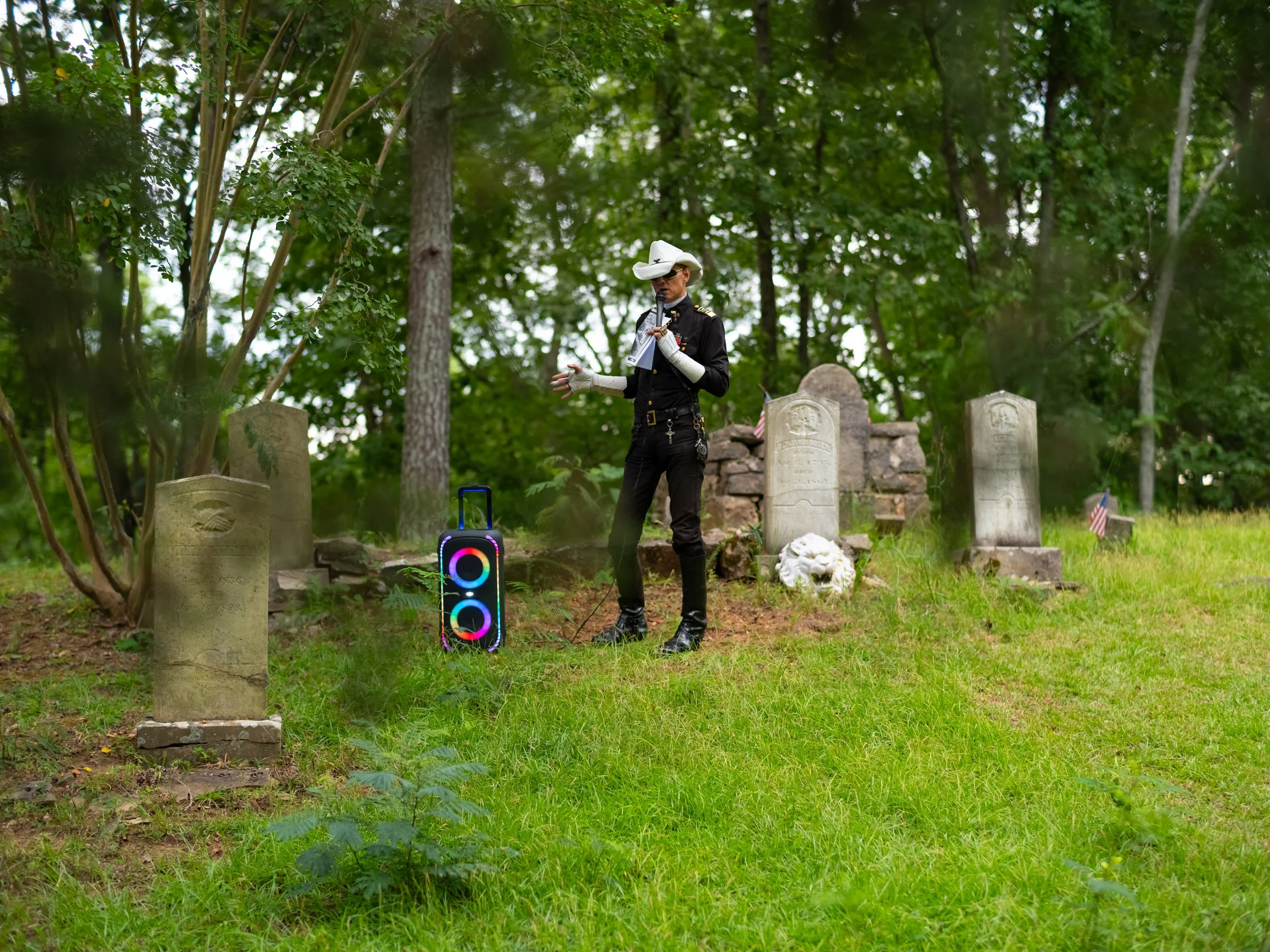
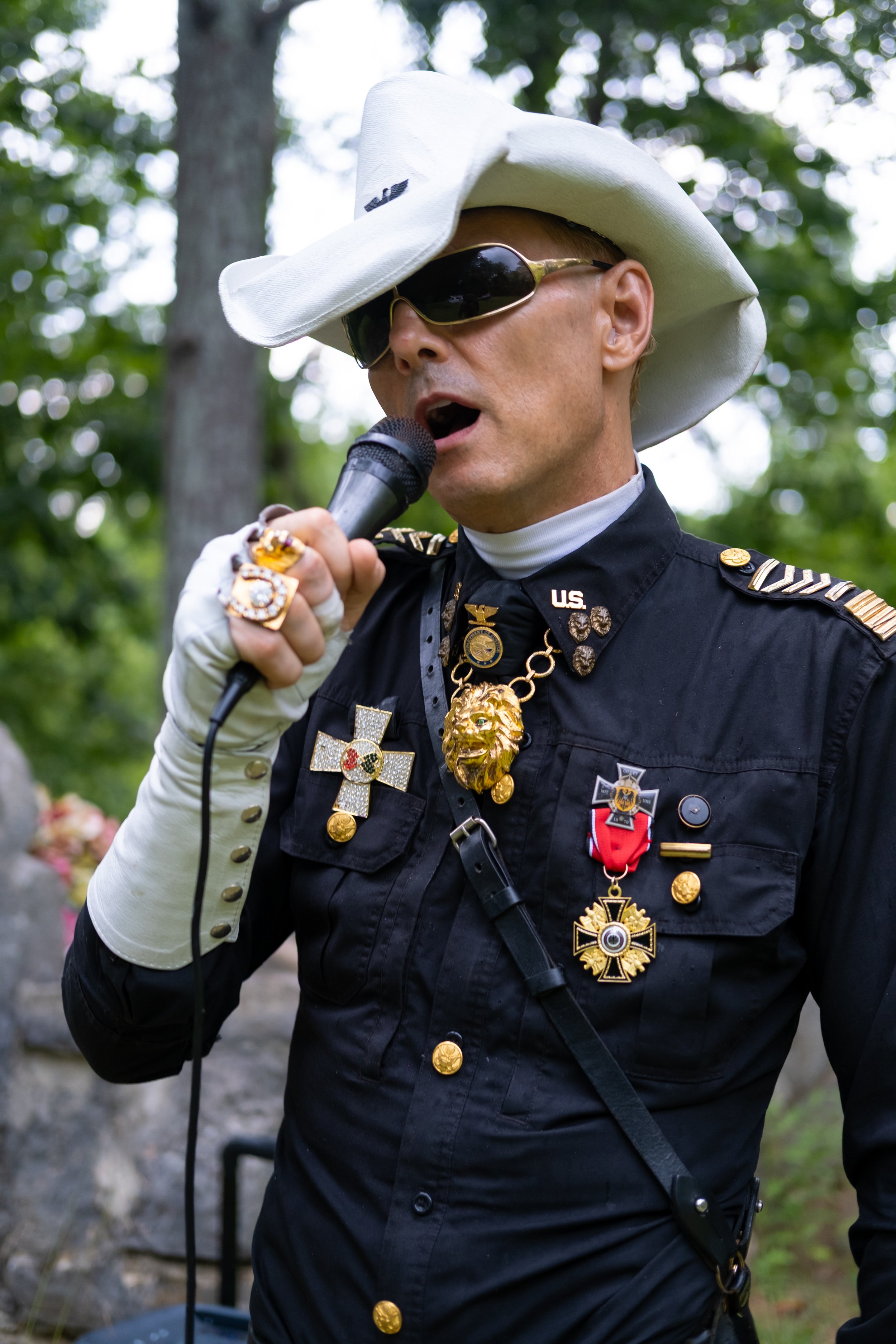
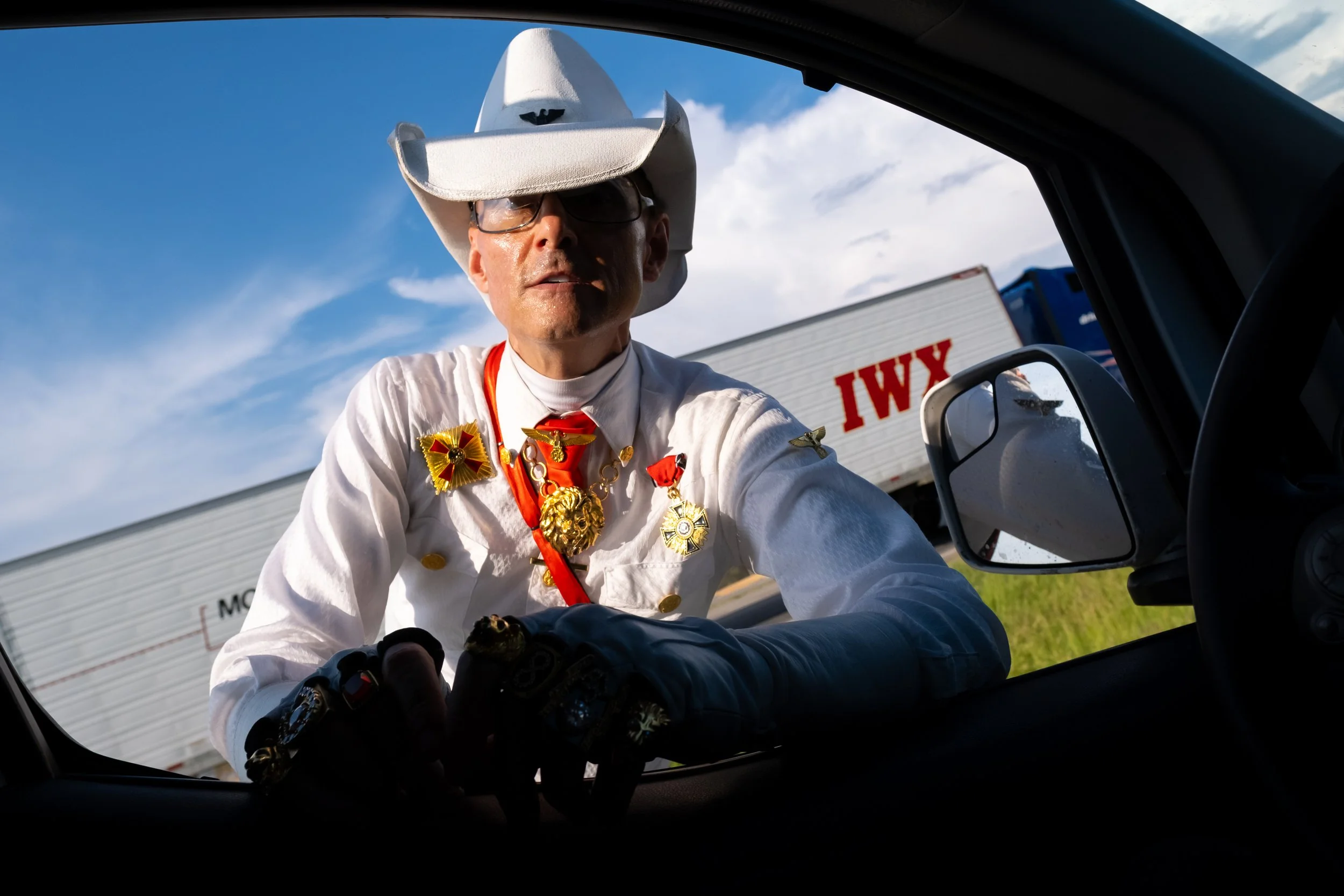
J. Monroe Johnson dresses not just for attention—but for survival. In his own words, he wears the uniform of a “German-European with a Southern American accent” because he is, as he puts it, “a ghost who was supposed to be annihilated.”
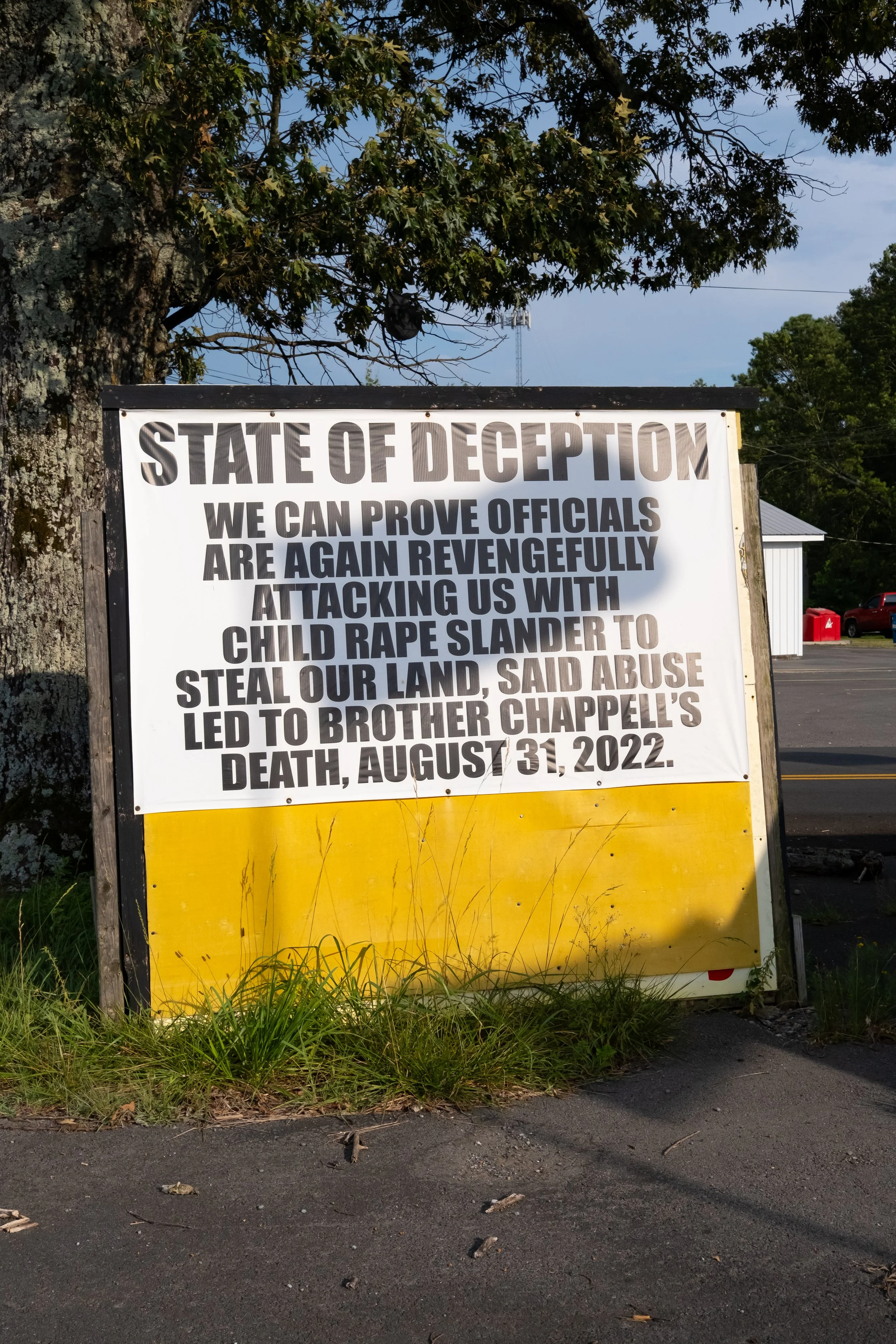
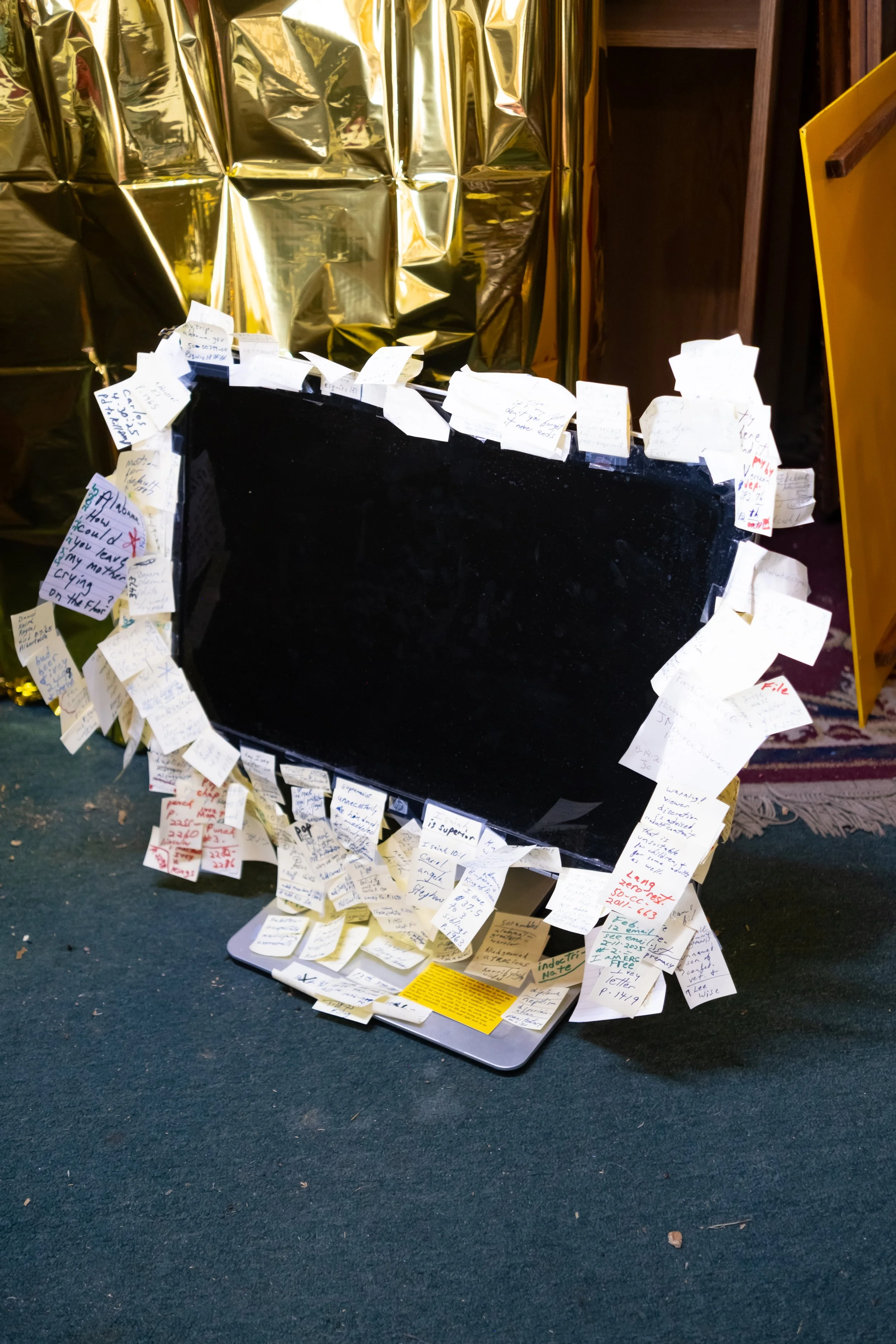
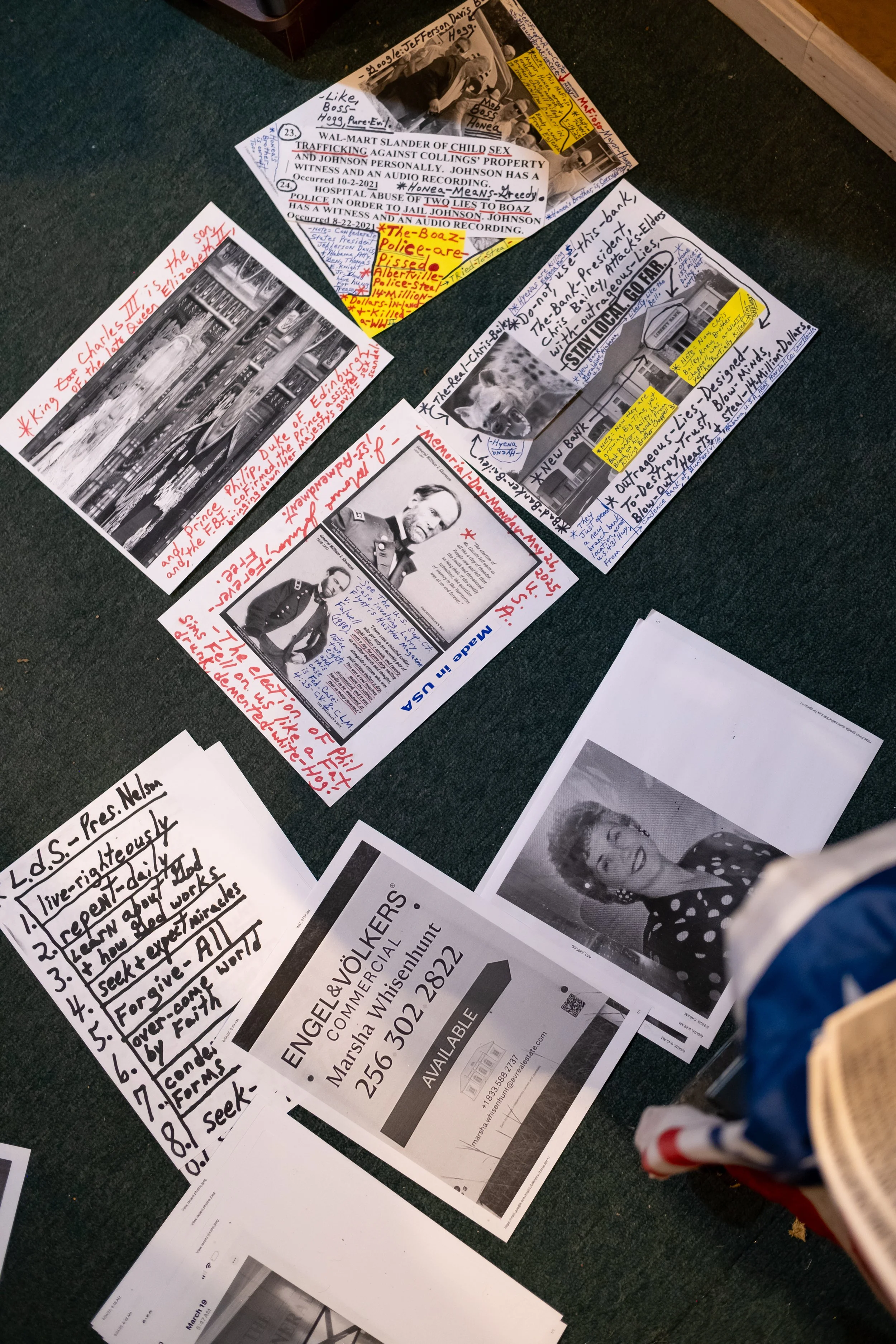
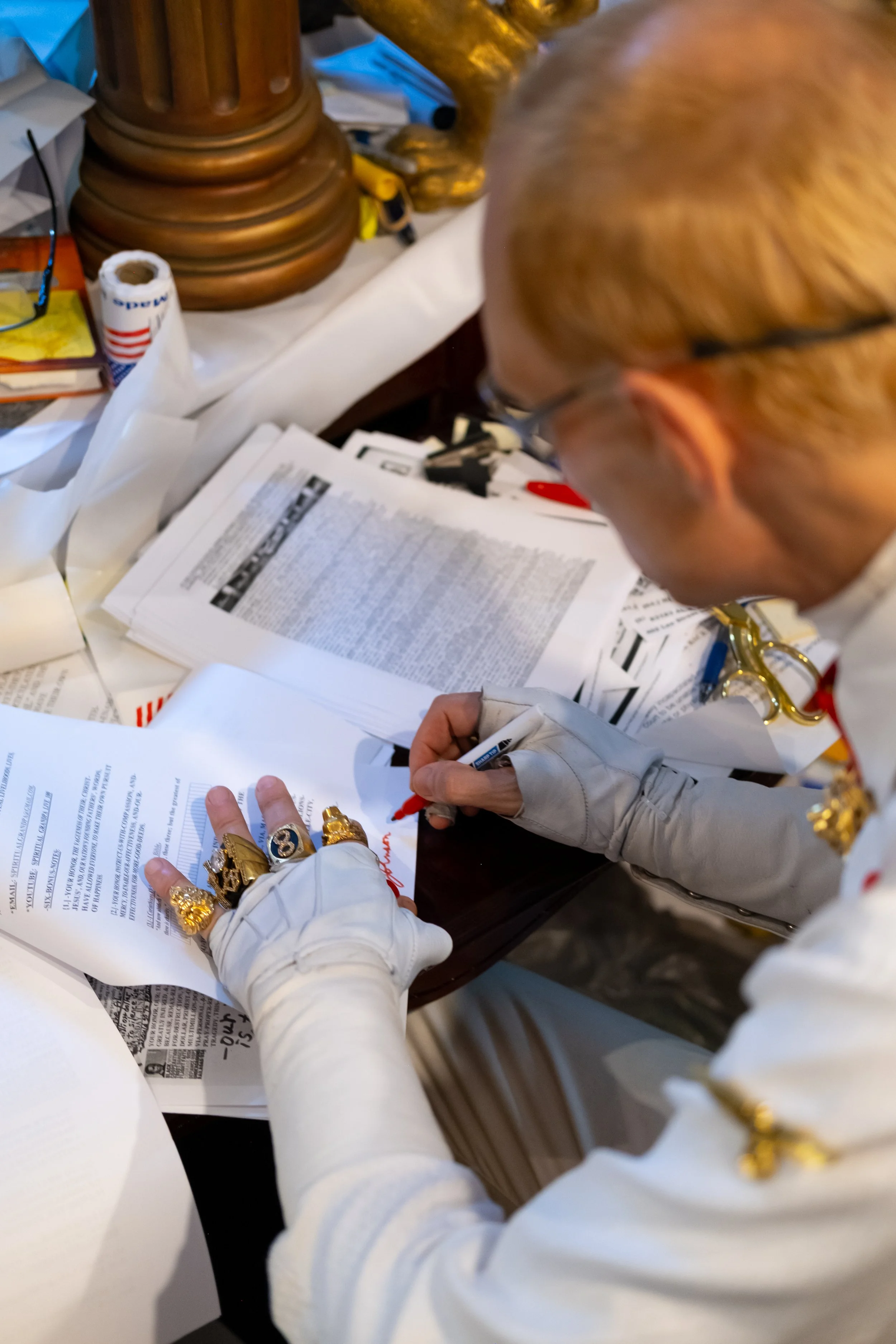
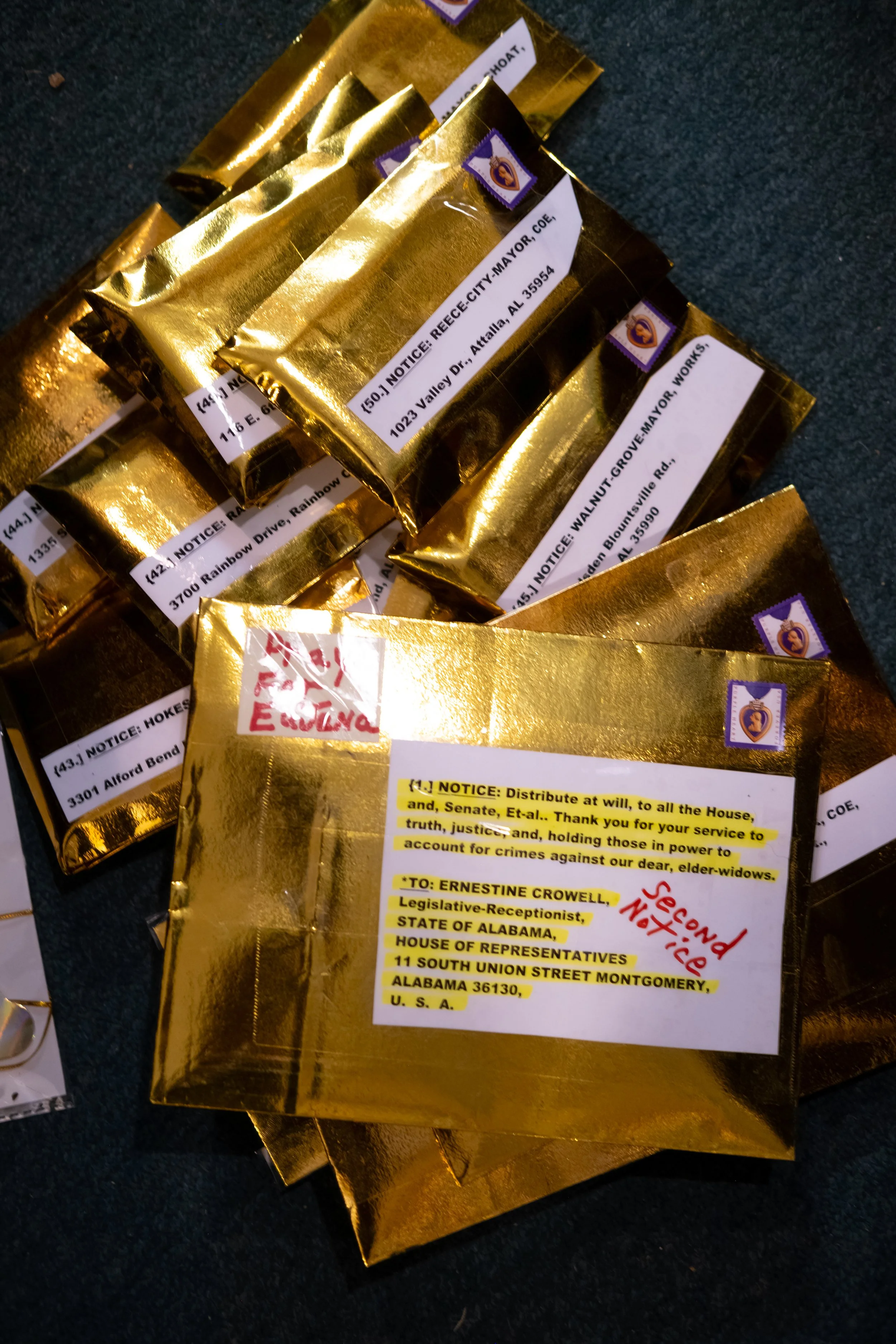
His white outfit is both costume and testimony. The medals and regalia, the cowboy hat, the boots — they aren’t ironic. They are armor. A response to what he sees as a coordinated attack by Alabama officials: a multi-year legal and financial siege that he believes was designed to destroy him and steal his family’s land. In his telling, it all ties back to a 2011 Alabama Supreme Court ruling (Case No. 1051726), and spirals forward through a 2018 foreclosure he claims was engineered by bankers, judges, and city officials acting like a "Mafioso" to rob him of his property.
His appearance, then, is a declaration: You didn’t finish me off.
“I was supposed to lose everything,” he says. “But God lifted me from the slimy pit and gave me a firm place to stand.”
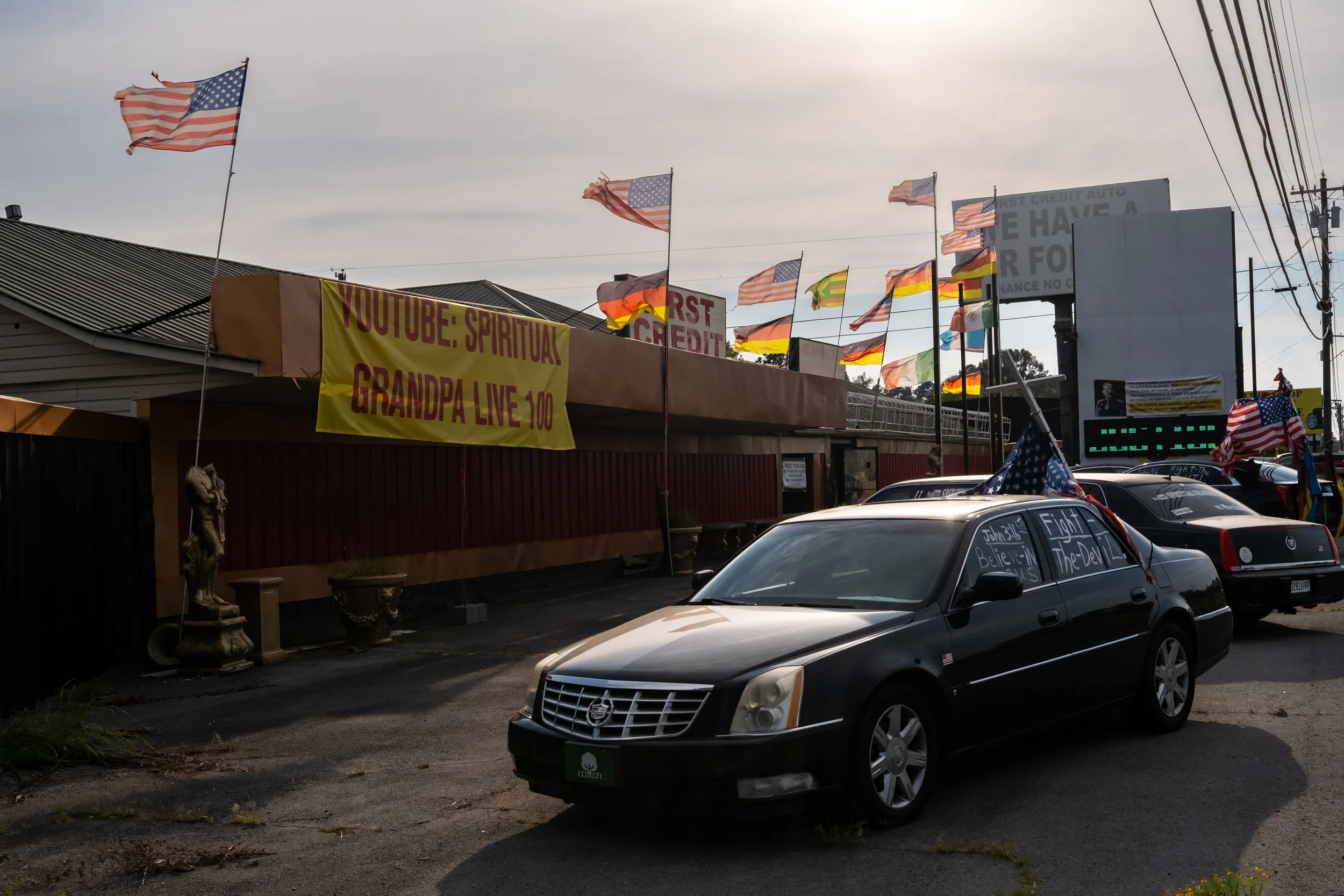
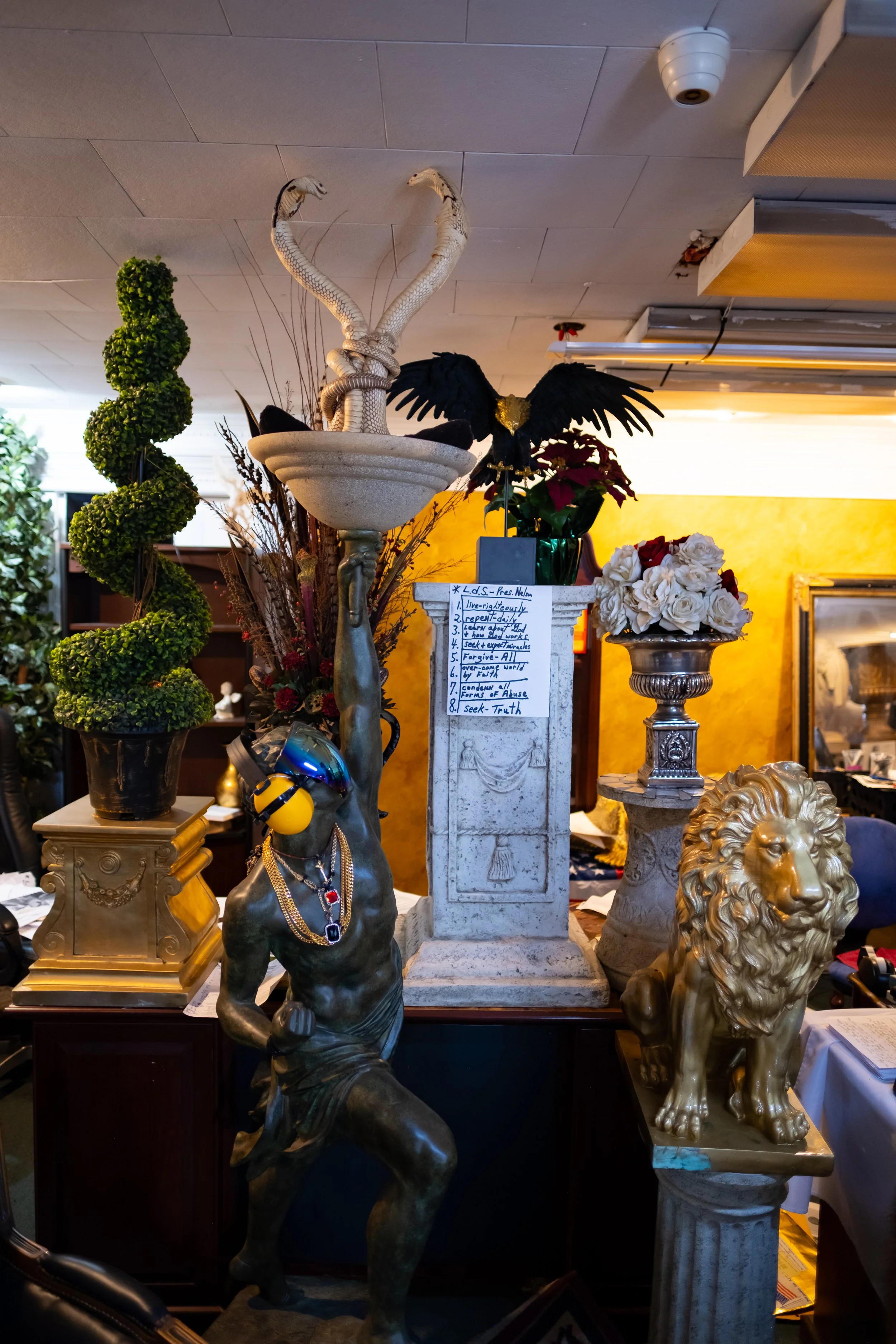
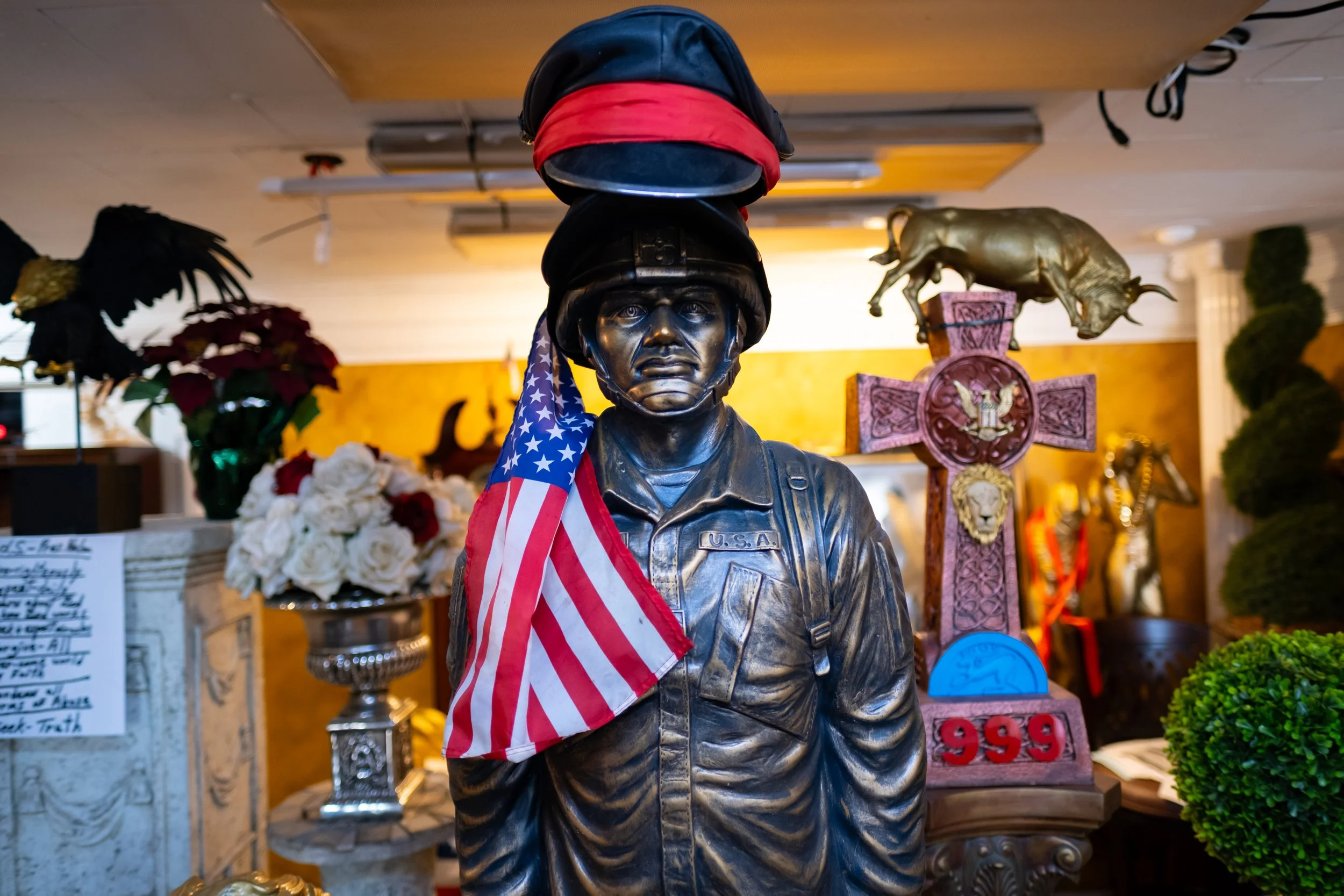
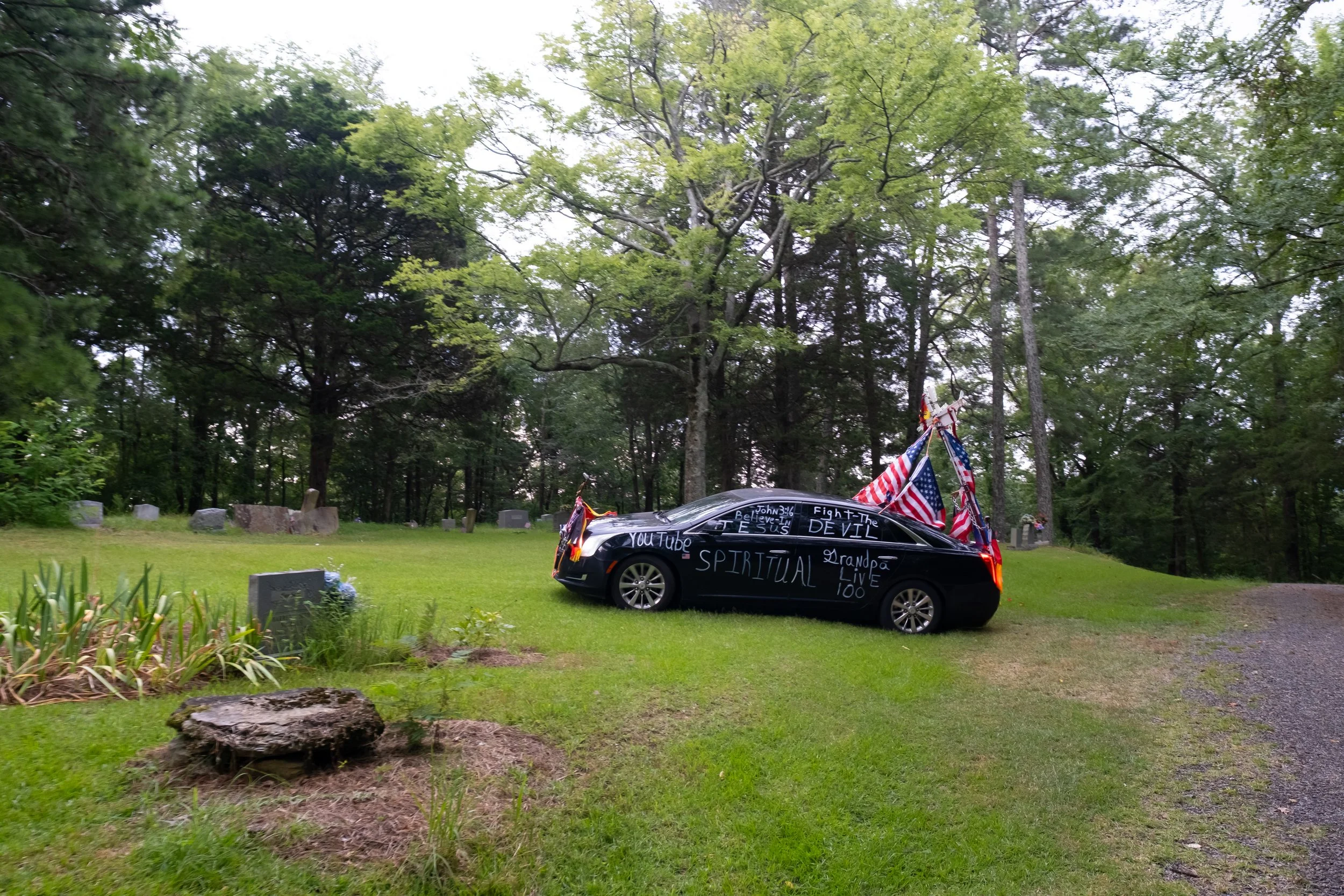
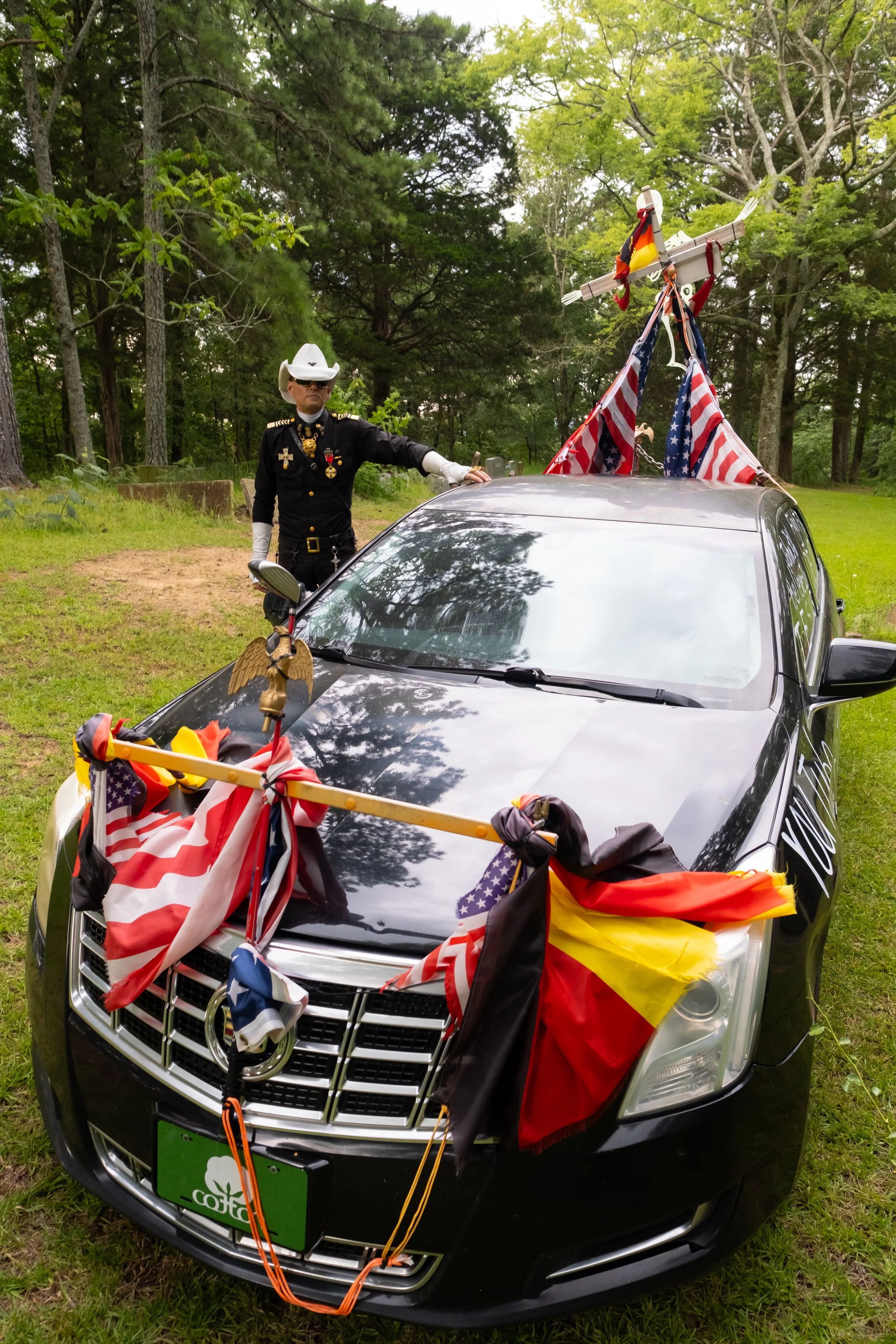
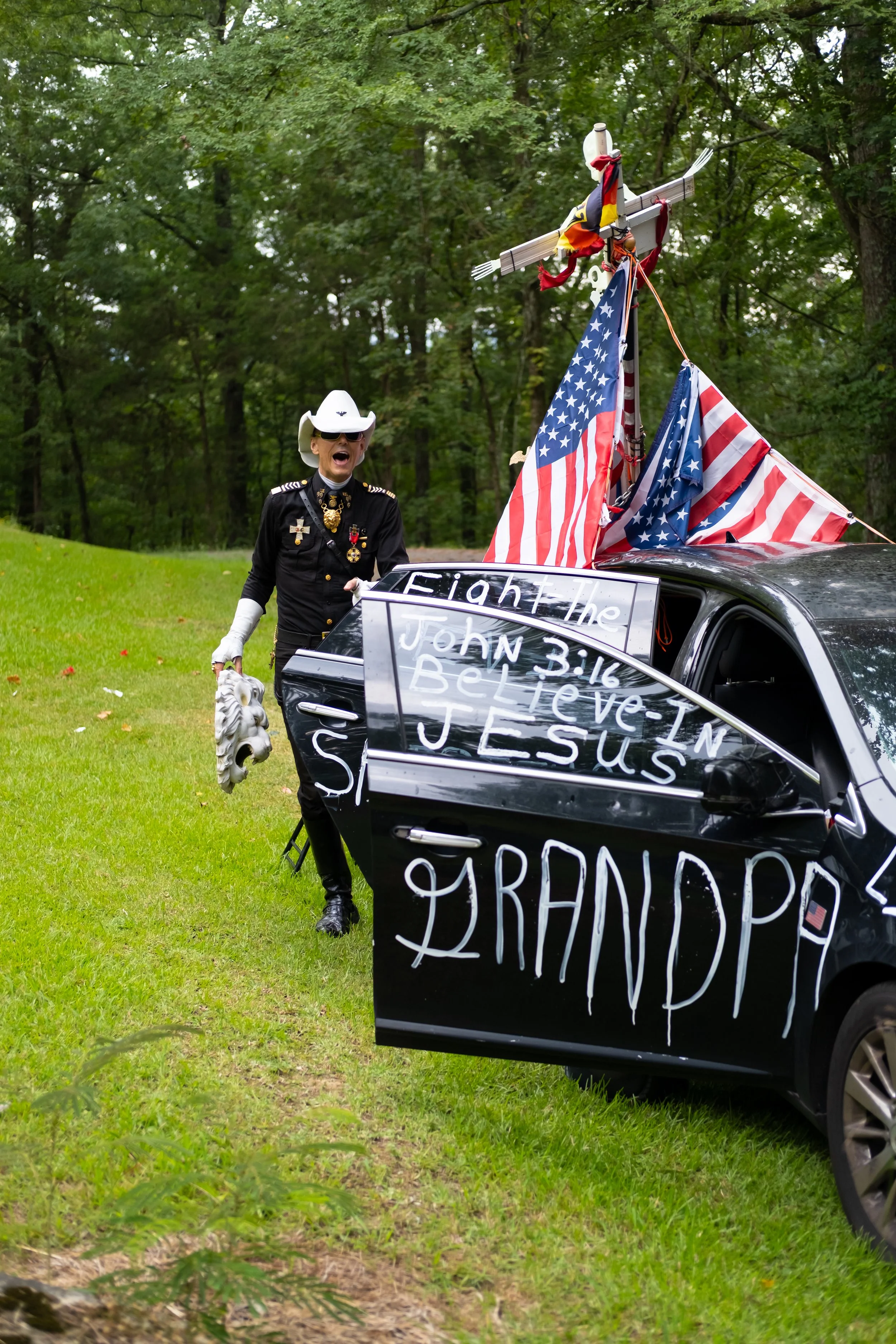
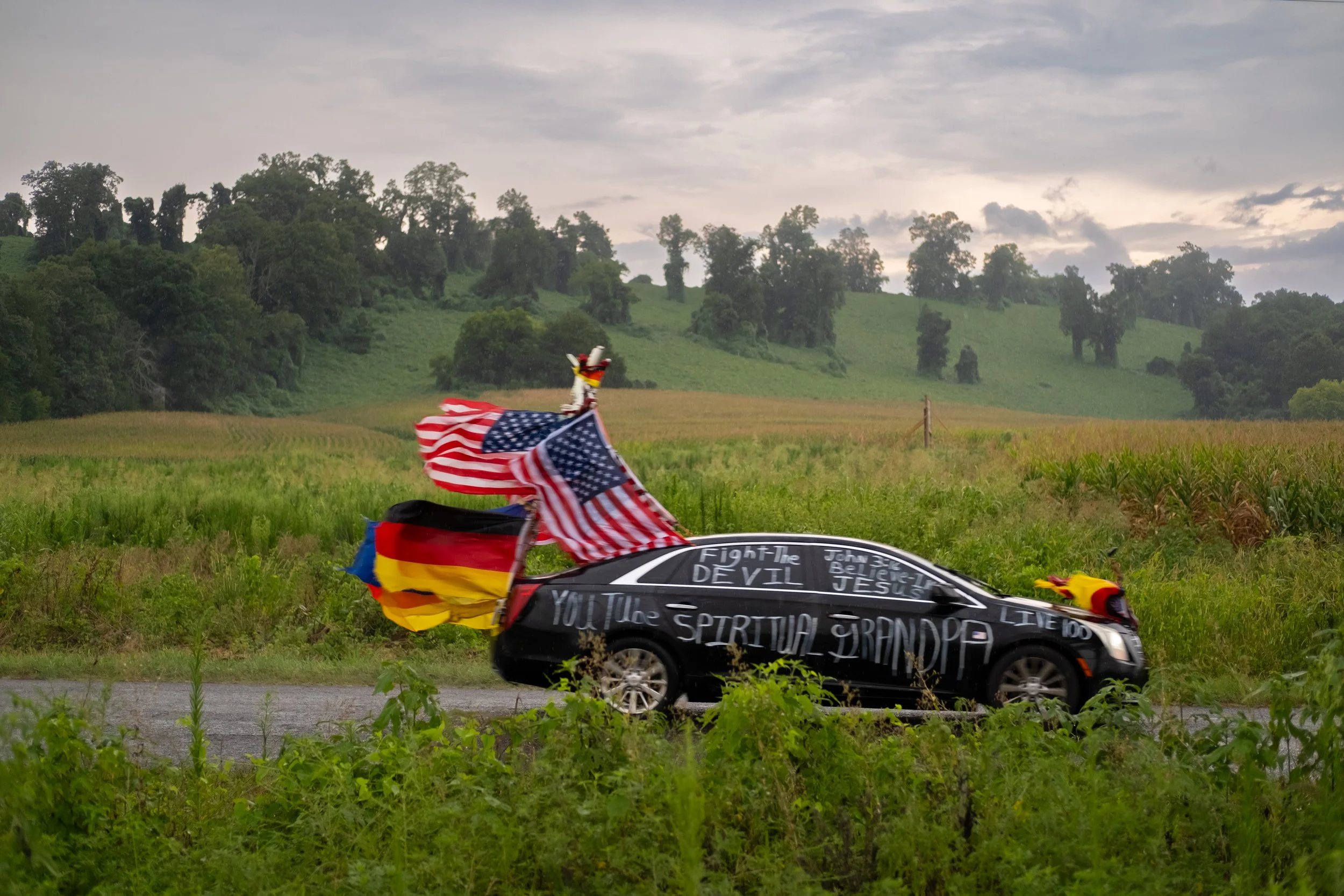
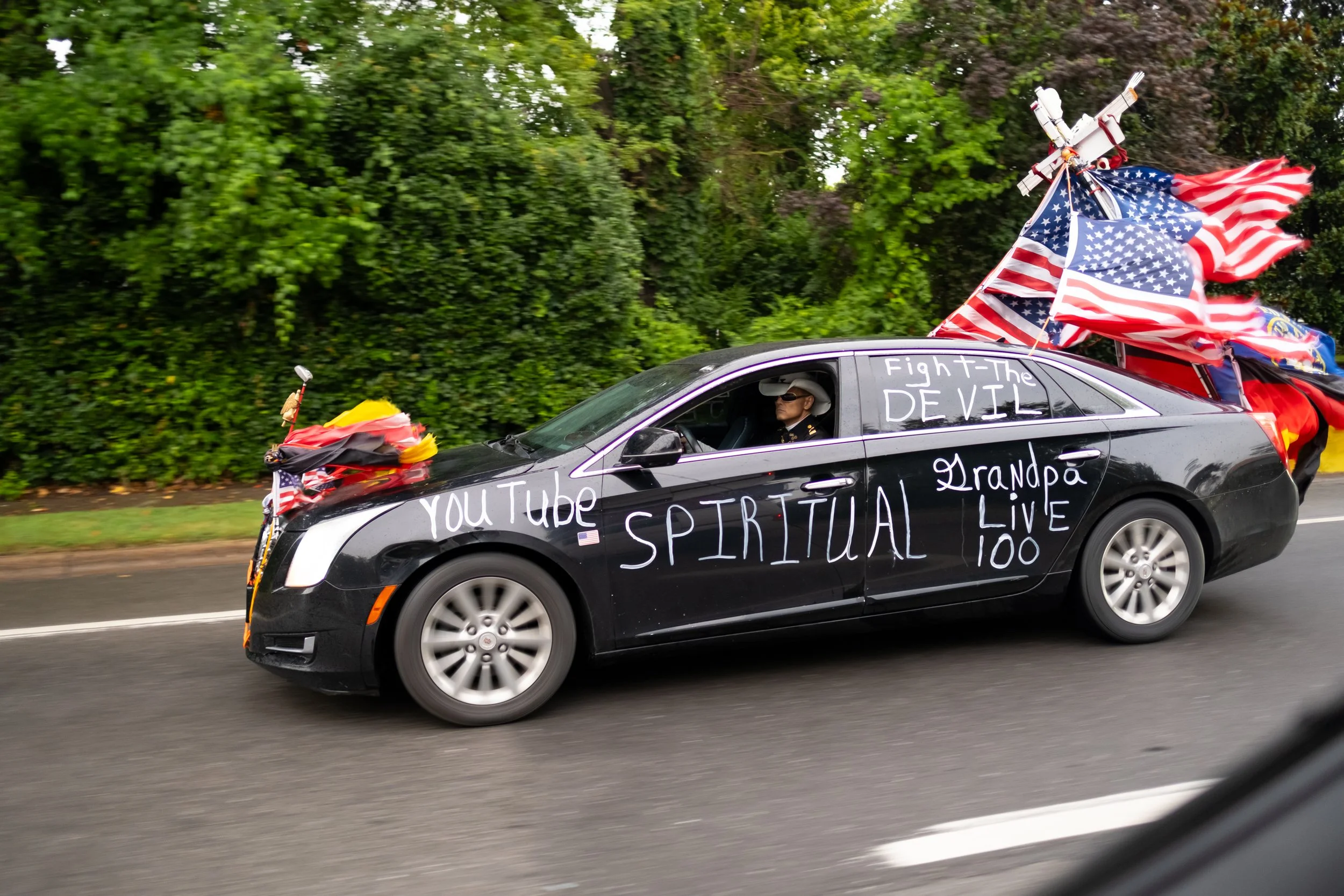
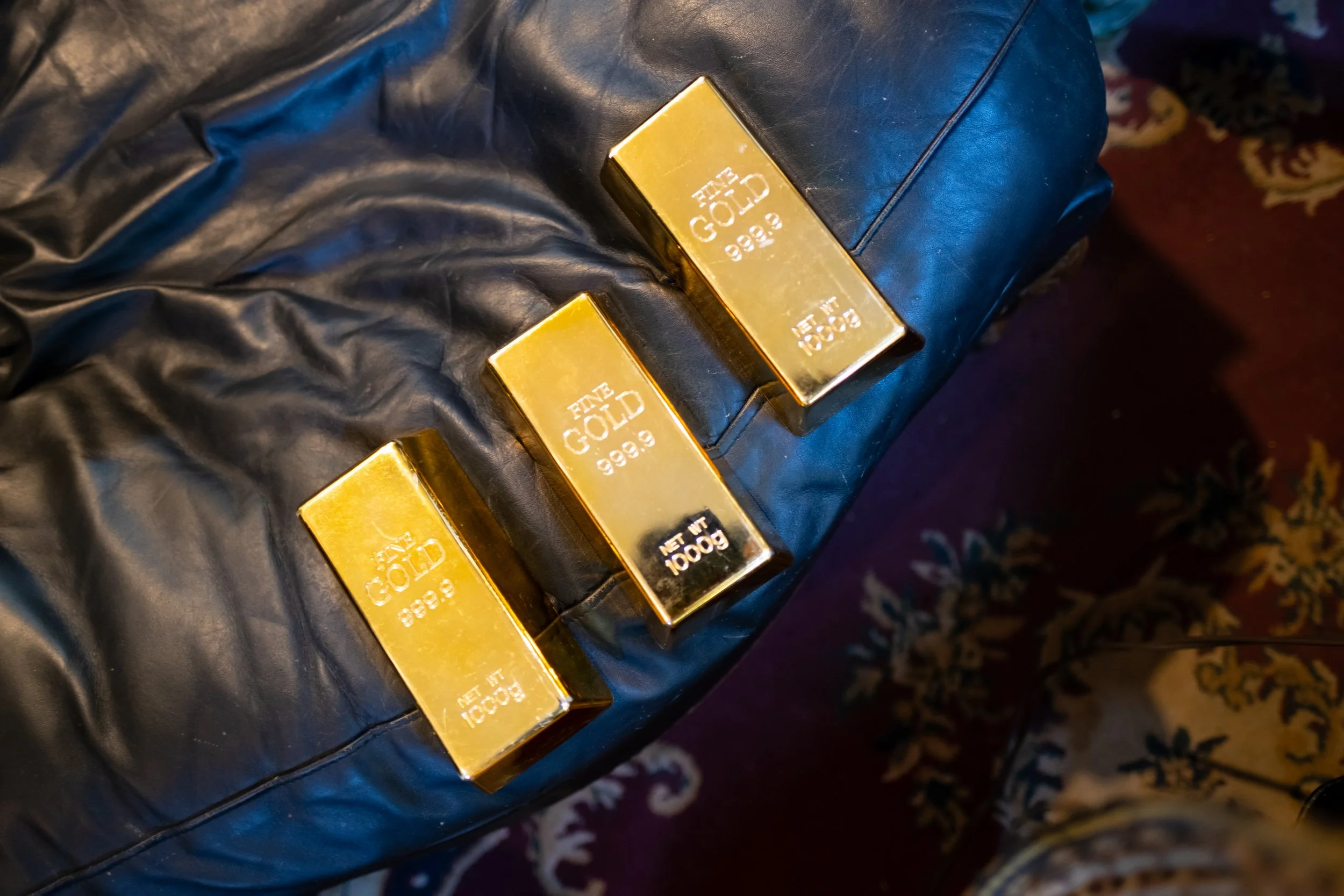
The Cadillac draped in flags, the rings spelling out righteousness and revenge, the gold medallions, the sidewalk sit-ins—these are all part of Monroe’s resistance. He stages himself like a one-man government in exile. In Smith’s images he stares straight into the camera, unblinking. Behind Mr Johnson is the the First Credit Auto sign —an emblem of the system he accuses of betrayal. The scene is part pageantry, part protest, and entirely sincere.
J. believes that survival is not enough. You must be seen surviving. And in that act—whether it’s delusion, defiance, or divine resilience—he’s turned his life into a living symbol of someone who won’t vanish quietly.